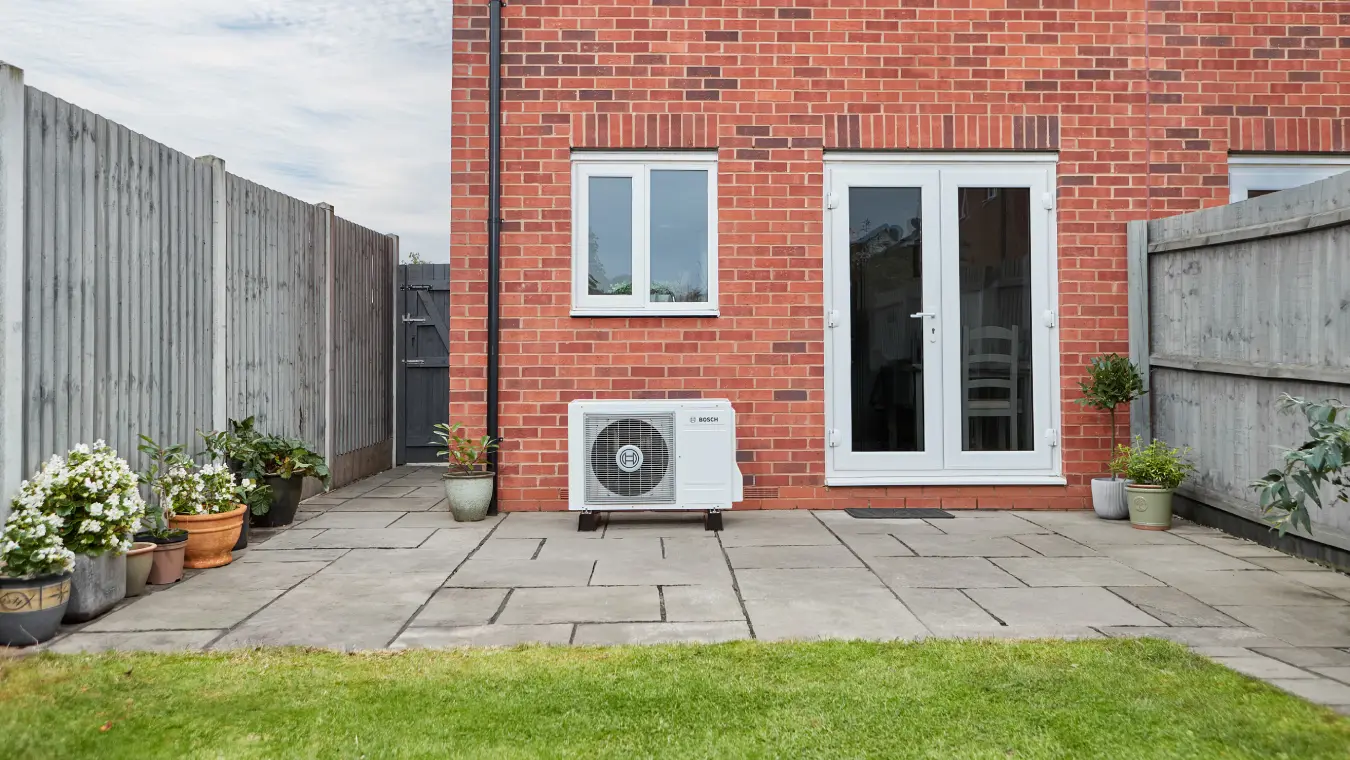
Air Source Heat Pump Installers in Kent
Cut your energy bills and reduce your carbon footprint with an air source heat pump from Transcrew — your trusted experts in eco-friendly heating across Thanet, Kent and the South East.
Get a Free Quote

Save £7,500 with a government grant
The UK Government is offering a significant financial incentive to help householders switch from traditional gas, oil or LPG boilers to low-carbon heat pumps. Under the Boiler Upgrade Scheme (BUS), eligible property owners can receive a grant worth £7,500 towards the cost of installing an air source or ground source heat pump.
Speak to an Expert
Request a Free Quote
Fill in the form and one of our MCS-certified engineers will be in touch within one working day.
Free Tool
What Will a Heat Pump Actually Cost You?
Find out exactly what a new air source heat pump would cost for your home — including how much you could save on energy bills each year, and whether you qualify for the £7,500 government grant.
- Personalised to your home & budget
- Instant results — no waiting around
- Grant eligibility automatically checked
- Zero obligation, zero sales pressure
What are Air Source Heat Pumps?
Air source heat pumps (ASHPs) are highly efficient renewable heating systems that extract heat from the outside air and transfer it into your home or business. Even when outdoor temperatures drop as low as -15°C, an air source heat pump can still provide reliable and consistent warmth.
How Do Air Source Heat Pumps (ASHPs) Work?
Air source heat pumps use the same compression and expansion process as a fridge or air conditioner, just in reverse. Even in freezing weather, there’s still heat energy in the air, and the system concentrates that heat to warm your home. Instead of generating heat by burning fuel, the system simply moves it, using only a small amount of electricity to run the pump and compressor. A heat pump can deliver up to five units of heat for every unit of electricity used — typically achieving three to five times the efficiency of conventional electric heating.
Key Benefits
Why Heat Pumps Are a Smarter Choice
Reduce Your Energy Bills
Heat pumps generate more energy than they consume — potentially cutting your heating costs by up to 40% annually compared to traditional gas or oil systems.
40%
Eco-Friendly Heating
Dramatically cut your carbon footprint using renewable energy from the outside air — a genuinely greener alternative to gas or oil.
Year-Round Comfort
One system for all seasons — heat your home in winter and cool it in summer with effortless efficiency.
20yr+
Long Lifespan
A well-installed heat pump will reliably heat your home for over 20 years with regular servicing.
Straightforward Installation
Less invasive than most alternatives — our engineers handle everything from survey to sign-off.
-15°C
Works in All Weathers
Modern heat pumps extract heat from the air even when outdoor temperatures drop to -15°C.
Our process
How it works
From your first enquiry to a warm, energy-efficient home — here's exactly what to expect when you choose Transcrew as your heat pump installer.
1
Free enquiry & estimate
Reach out to our friendly team to discuss your home and heating needs. We'll listen carefully and provide honest, no-obligation advice on the right heat pump solution for you.
2
Professional home survey
One of our qualified engineers visits your property to assess your insulation, existing heating system, and energy requirements — ensuring the ideal ASHP solution is designed specifically for your home.
3
Government grant support
We handle your Boiler Upgrade Scheme (BUS) application on your behalf — helping you access up to £7,500 in government funding to reduce your upfront costs significantly.
4
System design & scheduling
We design a tailored heat pump system to suit your property's layout and energy needs, then book your installation at a date and time that's most convenient for you.
5
MCS-certified installation
Our MCS-certified engineers carry out a professional, fully compliant installation with minimal disruption to your home. Most installations are completed within 2–3 days.
6
Handover & ongoing support
We walk you through your new system, provide full documentation, and offer ongoing maintenance — including annual servicing, performance optimisation, diagnostics, and repairs.
Ready to make the switch to renewable heating?
Get your free, no-obligation estimate today — covering Thanet, Kent & the South East.
Get a Free Quote
Service areas
Areas we cover
Transcrew provides expert heat pump and solar installations across Thanet, Kent and the South East. Find your area below.
Testimonials
What Our Clients Say?
FAQ
Frequently Asked Questions about Air Source Heat Pumps
Here are some common questions about heat pumps, if you still need to find out more information or have any enquiries, please call us on 01843 838636 or email office@transcrew.co.uk.
The duration of an air source heat pump installation depends on several factors, including the complexity of the job and the existing heating system. Generally, a straightforward installation takes about 2-3 days. This timeframe includes setting up the outdoor unit, connecting it to the indoor components, and integrating it with your current heating system. However, more complex projects that involve significant modifications or upgrades to your current system may take longer, potentially extending to a week or more.
While air source heat pumps are versatile and can be installed in most homes, their efficiency can be influenced by the level of insulation and the existing heating system. Homes with good insulation and a compatible heating distribution system (like underfloor heating or low-temperature radiators) are ideal candidates. A professional assessment is essential to determine the best solution for your property. Factors such as the size of your home, the type of insulation, and your heating needs will be considered to ensure optimal performance and energy savings.
Air source heat pumps require minimal maintenance compared to traditional heating systems. Regular checks include ensuring that the outdoor unit is free from debris such as leaves and snow, which can obstruct airflow. Filters should be cleaned or replaced periodically, as recommended by the manufacturer, to maintain efficiency. Scheduling annual servicing by a qualified technician is crucial to inspect and maintain the system, ensuring it operates at peak performance. This servicing can help identify any potential issues early and prolong the lifespan of your heat pump.
Air source heat pumps use the same compression and expansion process as a fridge or air conditioner — just in reverse. Even in freezing weather, there’s still heat energy in the air, and the system concentrates that heat to warm your home.
Instead of generating heat by burning fuel, the system simply moves it — using only a small amount of electricity to run the pump and compressor. A heat pump can deliver up to five units of heat for every unit of electricity used — typically achieving three to five times the efficiency of conventional electric heating.
What's more, it's often possible to connect an air source heat pump to your existing heating and hot water system. Although heat pumps work best with larger or more efficient radiators or underfloor heating.
Modern air source heat pumps are designed to operate quietly. The outdoor unit produces a sound level similar to a modern refrigerator, typically around 40-60 decibels. This makes them suitable for residential areas without causing noise disturbances. Proper installation and placement of the outdoor unit can further minimize any noise impact. If noise is a concern, discuss it with your installer, who can recommend the quietest models and optimal placement strategies to ensure minimal disruption.